And that you may not even find in Rosetta Stone’s or Duolingo’s Spanish lessons.
The best way to feel like a local in a new country is to speak their language, and more importantly, to know the slangs and the colloquial expressions. If you already speak Spanish but have never been to Mexico, chances are you do not know the following expressions. If you do not speak Spanish, you definitely would not know the expressions explained below. Either way, if you plan to visit Mexico, I strongly recommend that you acquaint yourself with these 7 Mexican slang expressions. The locals will love you.

Pronounced as k ondaa (with a soft ‘d’ sound).
Guay means "cool" in Spain. Its origin, interestingly, lies in the Arabic word, kuayis ( كويس), which means “of good quality.” It does not exist in the Mexican Spanish dictionary. Even in Spain its use has declined and its contractions uay or way are more common.
In Mexico, güey, or its contraction wei or wey, means "dude" or "dudette." To me it sounds like only dude, but I have seen guys use it to address their female friends as well. You can go around impressing the locals by greeting them with Que onda, wei?
I have met some people who punctuate every second sentence with this expression. I thought I could use it freely.

But I was advised not to use it with somebody whom I have just met or am not very close to. I checked the Mexican Language Academy's dictionary to verify that. Indeed, it can be used as an expression of endearment for a close friend; a stranger may take offence because the word also means a goofy or a foolish person. Apparently, mai is what I should use then. Like this: Que onda, mai?
Pronounced as way-i (i as in the word sit).

If I told you that these places exist in Mexico, seeing their prisitine beauty, you should exclaim “¡No mames!” in disbelief.


Or, if I told you that you can travel through Scandinavian countries on a living-expense budget of only €15-20 per day, you would definitely exclaim, “¡No mames!” But it’s true.
It is typically used by the younger generation.
Pronounced as no maamays (with a softer than usual ‘s’).
They use OK as well. OK is almost universally understood. But Ándale is more Mexican. So if you want to feel like a local, use it instead! Ándale?
Pronounced as aandalay (with a soft ‘d’).

Or when Mexicans ask me where I am from, and I tell them “de la India,” they usually respond with “¡Órale! ¡Está muy lejos!” (Wow, it is too far!). In this sense, it is akin to the interjection, No mames.
But, Órale is a lot more versatile. In addition to expressing surprise or disbelief, you could use Órale to simply say OK or “right on” (like Ándale).

Or, to encourage someone. For instance, if I told you I am physically exhausted, you could use this expression in the following manner: “¡Órale! You can do it!”

This one word probably has more than one hundred uses! Did I hear you say “¡Órale!”?
Pronounced as oraalay (with a slightly elongated ‘O’).

You could simply upon experiencing something worthy of praise, say ¡Que padre!
Pronounced as mooi paadray (with a soft ‘d’) or k paadray.
7. Mande
This one is very straightforward. It means “I beg your pardon.”

If you have learnt Spanish as spoken in Spain, you probably use Cómo or Perdón instead. So it may be a little jarring, at first, to hear the Mexicans say, “Mande?”
Mande comes from mandar which means “to order.” One of my Mexican friends told me that the origin of this expression probably goes back to the colonial times when Mexicans were enslaved by the Spanish. Instead of requesting their masters to repeat, they perhaps used to ask them, “What did you order, master?” Somehow, its usage did not diminish even though Mexico became independent.
It may be used as a rhetorical device as well:

Pronounced as maanday (with a soft ‘d’).
There are, of course, innumerable other expressions. Mexican Spanish is extremely rich and colourful when it comes to slang expressions. But the others may require some discretion. These 7 expressions appear to be the most common and can be freely used in the company of locals. Whenever I use any one of these, it always brings a smile on their faces. No mames even makes them laugh each time I use it.
One last tip: while it is not in connection with Mexican slang expressions, I thought it would be useful for you to know. In Mexico, one would typically wish Buenos dias or Good Morning between midnight and midday, Buenas tardes or Good Evening from 12 noon till about 7pm, and Buenas noches or Good Night from 7pm onwards.
Now that you know how to use the most common Mexican slang expressions, I wish you happy and safe travels to Mexico!
The best way to feel like a local in a new country is to speak their language, and more importantly, to know the slangs and the colloquial expressions. If you already speak Spanish but have never been to Mexico, chances are you do not know the following expressions. If you do not speak Spanish, you definitely would not know the expressions explained below. Either way, if you plan to visit Mexico, I strongly recommend that you acquaint yourself with these 7 Mexican slang expressions. The locals will love you.
1. Que onda?
First things first, you must know how to say "What’s up." When I was in Spain, I never heard Que onda. The Spaniards preferred Como estas or Que tal. Mexicans do use those expressions. However, in informal conversations they seem to prefer Que onda. I love the sound of it.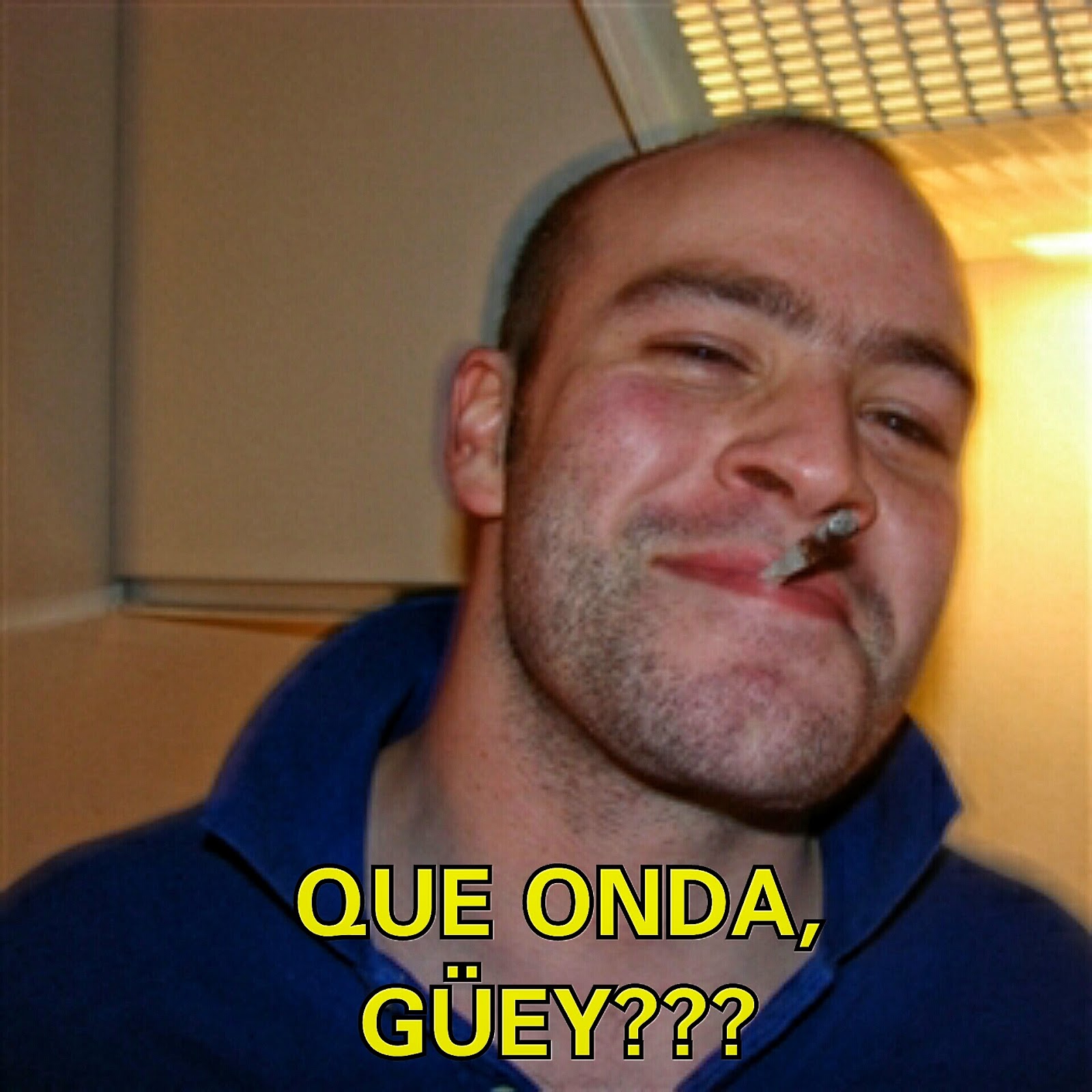
Pronounced as k ondaa (with a soft ‘d’ sound).
2. Güey
Spanish learners often confuse the words guay and güey.Guay means "cool" in Spain. Its origin, interestingly, lies in the Arabic word, kuayis ( كويس), which means “of good quality.” It does not exist in the Mexican Spanish dictionary. Even in Spain its use has declined and its contractions uay or way are more common.
In Mexico, güey, or its contraction wei or wey, means "dude" or "dudette." To me it sounds like only dude, but I have seen guys use it to address their female friends as well. You can go around impressing the locals by greeting them with Que onda, wei?
I have met some people who punctuate every second sentence with this expression. I thought I could use it freely.

But I was advised not to use it with somebody whom I have just met or am not very close to. I checked the Mexican Language Academy's dictionary to verify that. Indeed, it can be used as an expression of endearment for a close friend; a stranger may take offence because the word also means a goofy or a foolish person. Apparently, mai is what I should use then. Like this: Que onda, mai?
Pronounced as way-i (i as in the word sit).
3. ¡No mames!
It is the Mexican substitute for “Are you kidding me?” or “You must be joking!”.
If I told you that these places exist in Mexico, seeing their prisitine beauty, you should exclaim “¡No mames!” in disbelief.


Or, if I told you that you can travel through Scandinavian countries on a living-expense budget of only €15-20 per day, you would definitely exclaim, “¡No mames!” But it’s true.
It is typically used by the younger generation.
Pronounced as no maamays (with a softer than usual ‘s’).
4. Ándale
You will hear this expression very often. It usually means OK, but you may hear Mexicans use it in other contexts as well. For instance, if you asked somebody for directions and later expressed your thanks by saying Gracias, a Mexican may respond with Ándale instead of De nada (which means “You are welcome.”). If a Mexican were to ask you, "What does ´Mexico´ mean," and you replied, "The navel of the moon," you will get to hear ¡Ándale! In this context it means, "Exactly" or "Right on."They use OK as well. OK is almost universally understood. But Ándale is more Mexican. So if you want to feel like a local, use it instead! Ándale?
 |
| The gentleman on the right is the current Prime Minister of India. He is known for his obsession for selfies. |
Pronounced as aandalay (with a soft ‘d’).
5. Órale
If you got to know of somebody travelling by bike, like me, that’s what you should say: “¡Órale!” (Pardon the abject lack of modesty!)
Or when Mexicans ask me where I am from, and I tell them “de la India,” they usually respond with “¡Órale! ¡Está muy lejos!” (Wow, it is too far!). In this sense, it is akin to the interjection, No mames.
But, Órale is a lot more versatile. In addition to expressing surprise or disbelief, you could use Órale to simply say OK or “right on” (like Ándale).

Or, to encourage someone. For instance, if I told you I am physically exhausted, you could use this expression in the following manner: “¡Órale! You can do it!”

This one word probably has more than one hundred uses! Did I hear you say “¡Órale!”?
Pronounced as oraalay (with a slightly elongated ‘O’).
6. Muy padre
Padre means “father” in Spanish. Muy means “very.” Literally, this phrase translates into nothing. But Mexicans have come to use padre as an adjective as well, and it means “cool.” Use padre as often as you like to express your appreciation for anything Mexican. “Güey, those tacos were muy padre!” “The Mexican beaches are muy padre, wei.” “Mexicans are muy padre, wey!” “Gringos are so not padre.” (Gringo is a (pejorative) term that Mexicans use for white people, especially those from the US.)
You could simply upon experiencing something worthy of praise, say ¡Que padre!
Pronounced as mooi paadray (with a soft ‘d’) or k paadray.
7. Mande
This one is very straightforward. It means “I beg your pardon.”

If you have learnt Spanish as spoken in Spain, you probably use Cómo or Perdón instead. So it may be a little jarring, at first, to hear the Mexicans say, “Mande?”
Mande comes from mandar which means “to order.” One of my Mexican friends told me that the origin of this expression probably goes back to the colonial times when Mexicans were enslaved by the Spanish. Instead of requesting their masters to repeat, they perhaps used to ask them, “What did you order, master?” Somehow, its usage did not diminish even though Mexico became independent.
It may be used as a rhetorical device as well:

Pronounced as maanday (with a soft ‘d’).
There are, of course, innumerable other expressions. Mexican Spanish is extremely rich and colourful when it comes to slang expressions. But the others may require some discretion. These 7 expressions appear to be the most common and can be freely used in the company of locals. Whenever I use any one of these, it always brings a smile on their faces. No mames even makes them laugh each time I use it.
One last tip: while it is not in connection with Mexican slang expressions, I thought it would be useful for you to know. In Mexico, one would typically wish Buenos dias or Good Morning between midnight and midday, Buenas tardes or Good Evening from 12 noon till about 7pm, and Buenas noches or Good Night from 7pm onwards.
Now that you know how to use the most common Mexican slang expressions, I wish you happy and safe travels to Mexico!


